
Threatened, Endangered, and Diversity Program
Staff
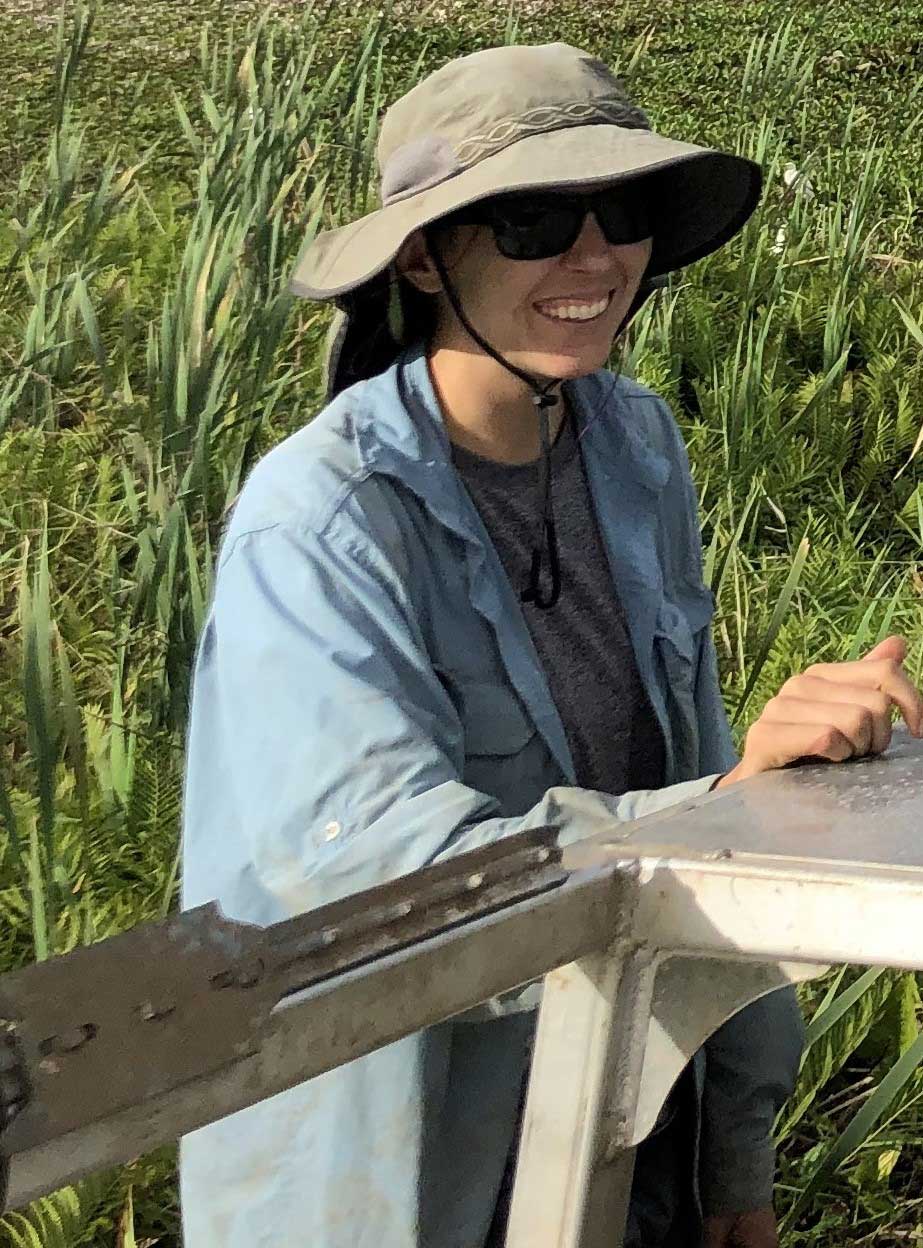
Lindsey Nietmann
Lindsey Nietmann
Lindsey started as the Threatened, Endangered and Diversity Program Coordinator in August 2024. She is based out of the ADF&G office in Anchorage.
Lindsey has over 15 years of experience working on various conservation and research projects involving birds and small mammals. Most recently, she worked for the Hawaii Division of Forestry and Wildlife, where she held positions as a wetland manager and subsequently as the state’s Forest Bird Recovery Coordinator. In the latter position, she led planning, research, and conservation management projects for 11 species of threatened and endangered forest birds and other non-listed species. She also managed Hawaii’s State Wildlife Grants and ESA Section 6 Grant programs as well as other competitive and/or discretionary grants. Lindsey earned her Ph.D. from the University of Washington studying the behavioral ecology of the Rufous Fantail, a small forest bird found in Australia and on Pacific Islands.
As the TED program coordinator, she works with the Division of Wildlife and TED program staff, as well as other state, federal, NGO and private partners to conserve species of greatest conservation need across Alaska. She works closely with these partners to implement the State Wildlife Action Plan, which provides guidance to keep "common species common". She has oversight and coordination responsibilities on behalf of the State of Alaska under the Endangered Species Act and primary oversight over the DWC portion of the State Wildlife Grants Program.
When not at work, Lindsey enjoys spending time outside with her husband and three children.
Lindsey can be reached at lindsey.nietmann@alaska.gov.
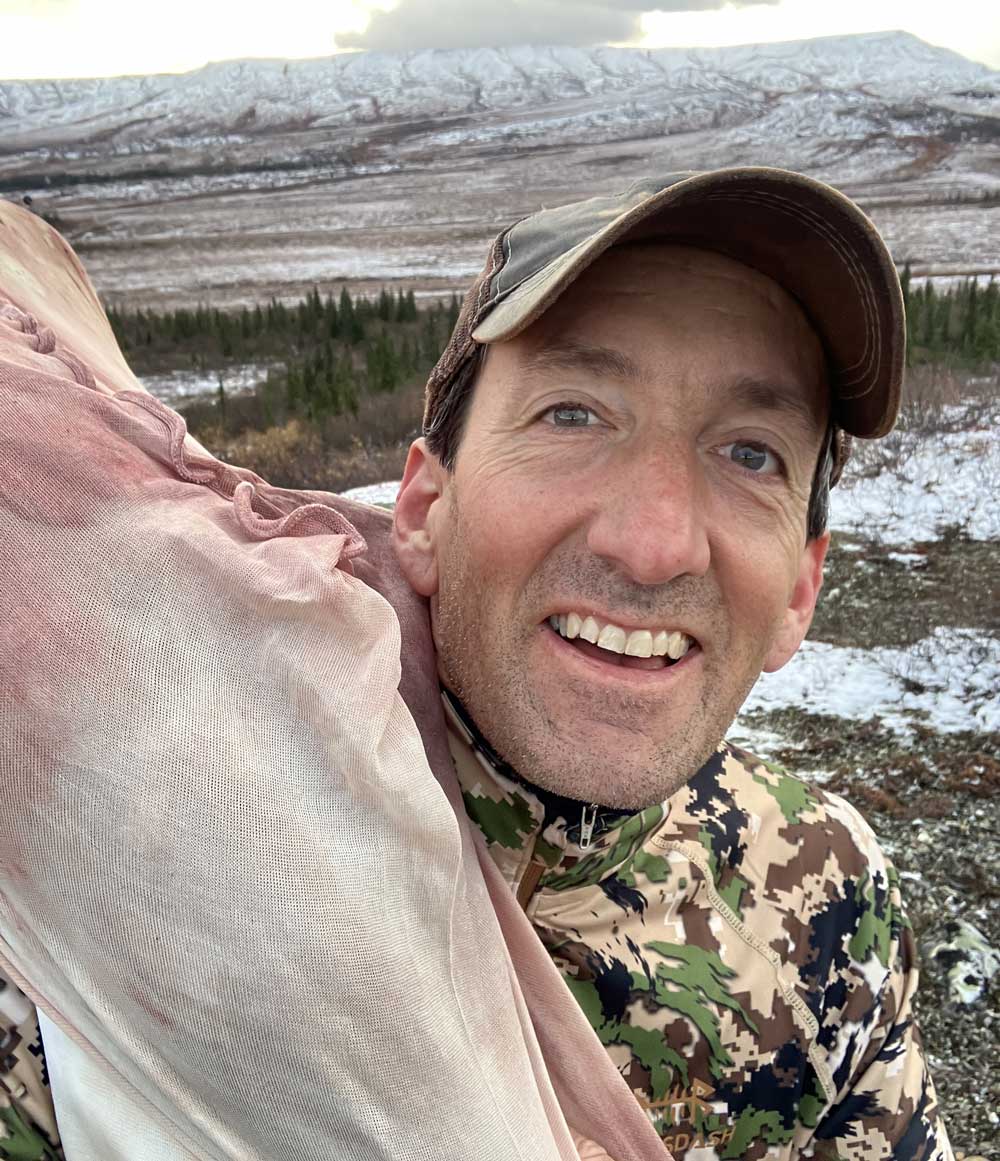
Travis Booms
Travis Booms
Travis is a Regional Wildlife Biologist for central, western, and northern Alaska (ADF&G Regions III & V) and is based in the Fairbanks ADF&G Regional Office. He holds a B.S. in Biology and Wildlife Management from the University of Wisconsin Stevens Point, a M.S. degree in Raptor Biology from Boise State University, and a PhD from the University of Alaska Fairbanks. Travis works on a variety of applied bird and mammal research and conservation projects across northern Alaska including work on songbirds, shorebirds, raptors, and Alaska hares.
Travis can be reached at travis.booms@alaska.gov or (907) 459-7335.
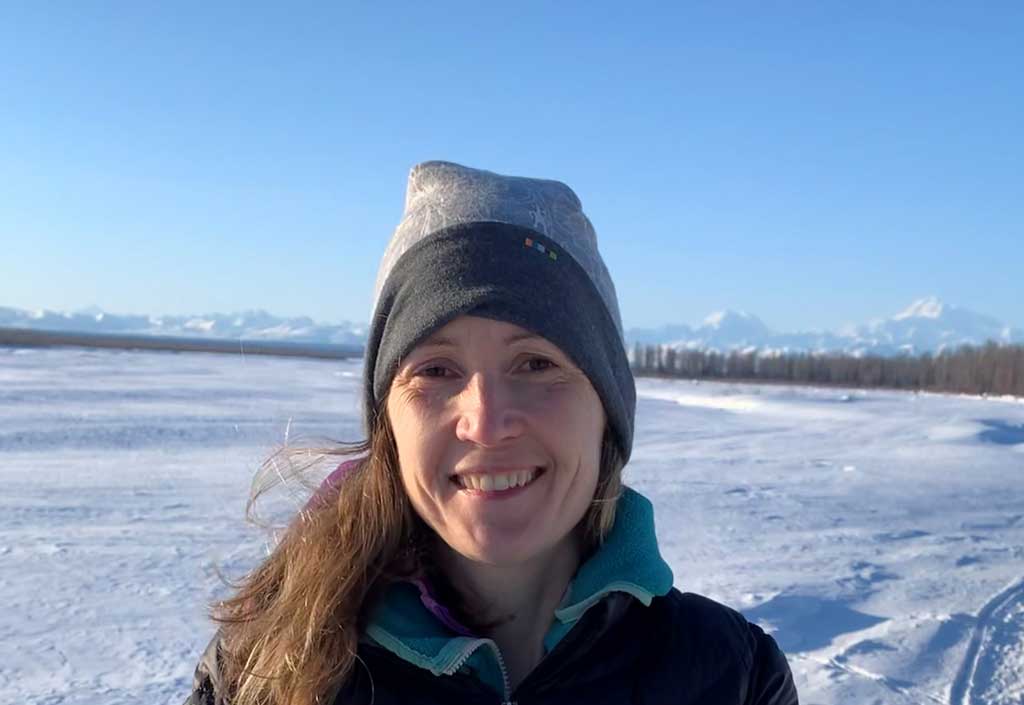
Katie Christie
Katie Christie
Katie is the statewide research coordinator for the TED program. Katie earned her Ph.D. from the University of Alaska Fairbanks on ptarmigan ecology in the Arctic, and her master's degree from the University of Victoria on the links between salmon and birds in coastal temperate rainforests. Other research projects she has worked on include investigating pronghorn population dynamics in North Dakota and quantifying Spectacled Eider survival relative to sea ice conditions. In addition, Katie has conducted human dimensions research in northern Alaska, focusing on the resilience of subsistence systems under changing Arctic conditions. Katie currently has two field-based research projects that focus on shorebirds (Lesser Yellowlegs) and small mammals (collared pikas). She enjoys combining research with partnership building to proactively conserve wildlife in Alaska. When not at her desk, Katie enjoys skiing, hiking, birding, and canoeing with her family.
Katie can be reached at katie.christie@alaska.gov or (907) 267-2332.
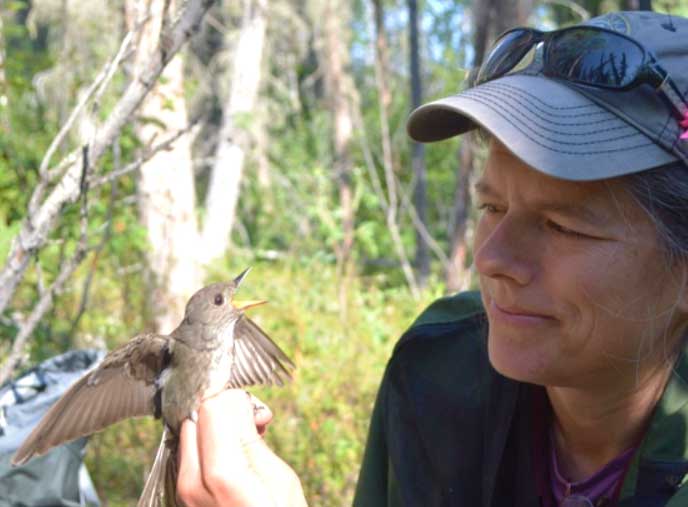
Julie Hagelin
Julie Hagelin
Julie Hagelin is the TED Program’s Conservation and Management Coordinator, based in the Fairbanks ADF&G Regional Office. Julie has 13 years of experience as a Wildlife Biologist 3 with the TED program and a total of 25 years of experience working with Alaska species. She is an excellent networker and is skilled at leveraging partnerships with university, agency and non-profit organizations to publish high-quality research and develop new tools to address birds in steep decline, such as Olive-sided Flycatchers and Bank Swallows. The Pacific Flyway Council Nongame Technical Committee asked Julie to lead their Priority Initiative on aerial insectivores, an honor that highlights her strengths in inter-agency leadership and strategic planning. Another important aspect of Julie’s position is to coordinate and implement Alaska’s State Wildlife Action Plan (SWAP).
Julie holds a B.S. in Biology from Pomona College, and earned her Ph.D. from University of New Mexico, where she investigated the breeding ecology of Gambel's and Scaled Quail. Julie's post-doctoral studies on seabirds in the Aleutians and on St. Lawrence Island brought her research focus to Alaska. As an affiliate member of the Institute of Arctic Biology at the University of Alaska Fairbanks, and as former faculty at Swarthmore College, Julie is experienced at building collaborative, multi-disciplinary partnerships and spearheading conservation research teams. Her previous work has also included critically-endangered species in New Zealand and Madagascar.
In her free time, Julie enjoys camping, fishing, skiing, and the multitude of opportunities to explore Alaska's wild places.
Julie can be reached at julie.hagelin@alaska.gov or (907) 459-7239.
Moira Ingle
Moira Ingle
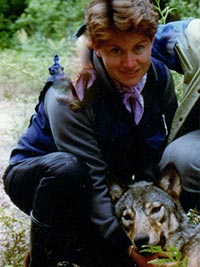
Moira Ingle is a Wildlife Biologist and the Endangered Species Act Coordinator for the Threatened, Endangered, and Diversity Program. She is based in Anchorage, but is responsible for ESA issues state-wide. She analyzes and drafts comments on scientific and policy issues for federal ESA petitions, proposed listings and delistings, critical habitat designations, recovery plans, and regulatory changes.
Moira holds a B.S. in Wildlife Science from Rutgers University and an M.S. in Wildlife Biology from the University of Vermont, where her thesis research focused on temporal and spatial interactions of red foxes, gray foxes, and Eastern coyotes. Moira also has research, survey, and management experience in the northeast U.S. and Alaska, working with white-tailed and Sitka blacked tailed deer, Alexander Archipelago wolves, Northern goshawks, Prince of Wales spruce grouse, small mammals, and neotropical migrant birds. She has substantial regulatory experience from her 7 years as an ADF&G Habitat Biologist in Southeast Alaska, where she worked extensively on logging issues on state, federal, and Alaska Native Corporation lands. Moira also earned a J.D. degree at the University of Idaho College of Law in 2010, with emphases on Natural Resources and Environmental Law and Native American Law, adding to her regulatory and policy perspectives.
When not working, Moira enjoys hiking, skiing, skating, and other outdoor activities with her son and her six dogs.
Jenell Larsen Tempel
Jenell Larsen Tempel
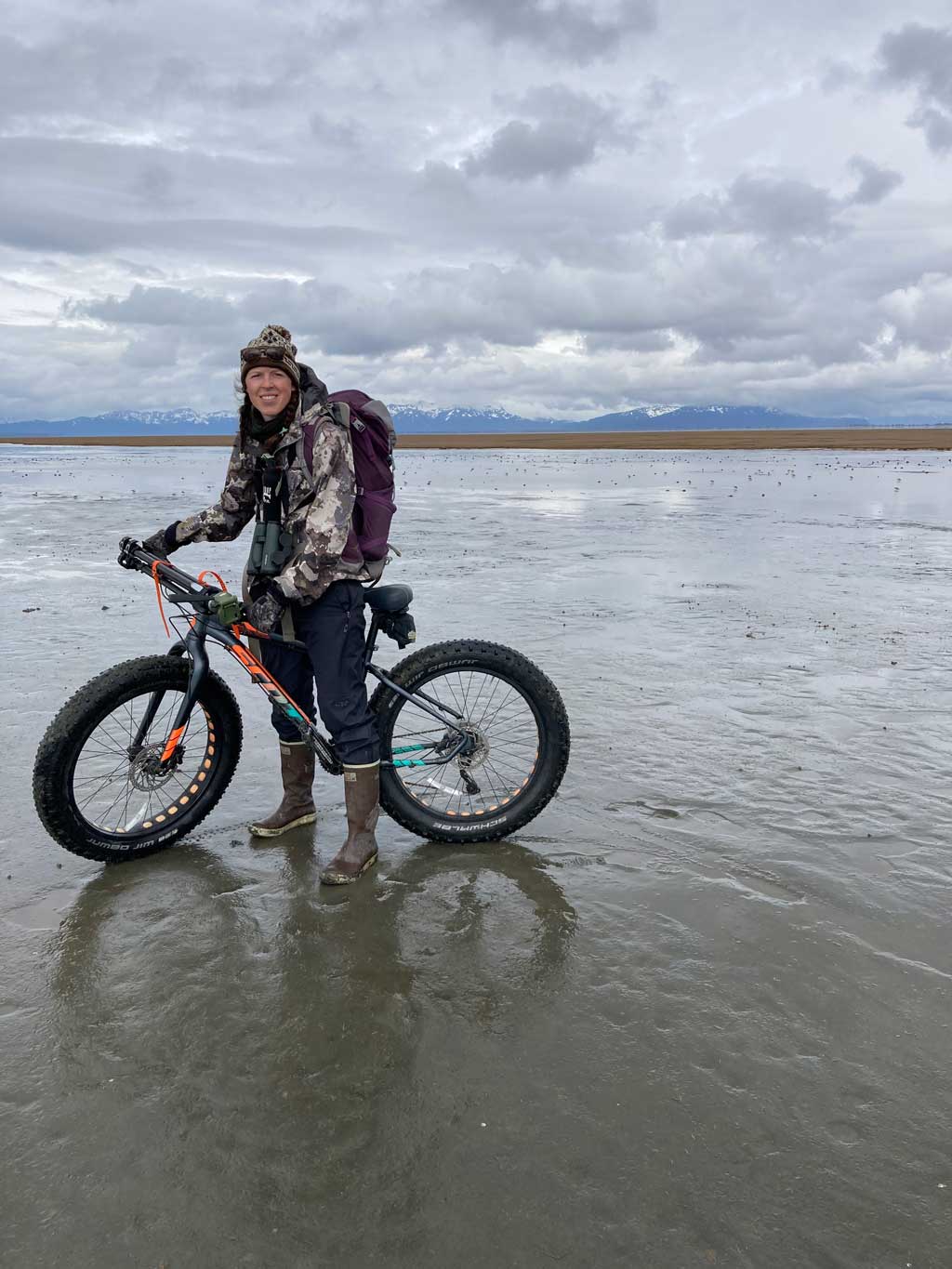
Jenell started her position as the Endangered Species Biologist within the TED program in April 2020. She is based in the Juneau ADF&G Headquarters office and travels throughout the state working with government and private partners to fulfill the objectives of the Department and the Threatened, Endangered, and Diversity Program.
Jenell holds a B.S. in Marine Science from Jacksonville University and earned her Ph.D. from the University of Alaska Fairbanks. Her dissertation research focused on the reproductive ecology of the Pacific walrus and how loss of sea ice impacts stakeholders on St. Lawrence Island and their marine ecosystem. Jenell's research experience has included an array of taxa throughout Alaska including threatened/endangered species and candidate species under the Endangered Species Act, hunted species, commercial fisheries, and marine mammals. She brings experience conducting collaborative research with state and federal partners, Alaska Native organizations, universities, and the public. She currently co-chairs the Habitat and Threats Mitigation Committee on the Cook Inlet Beluga Whale Task Force and is involved with working groups for short-tailed albatross, humpback whales and Aleutian terns.
In her free time, Jenell enjoys playing volleyball, fishing, hunting, spending time in and on the water, and exploring the intertidal and alpine with her lab and husky.
Jenell can be reached at jenell.larsentempel@alaska.gov or (907) 465-6318.
Arin Underwood
Arin Underwood
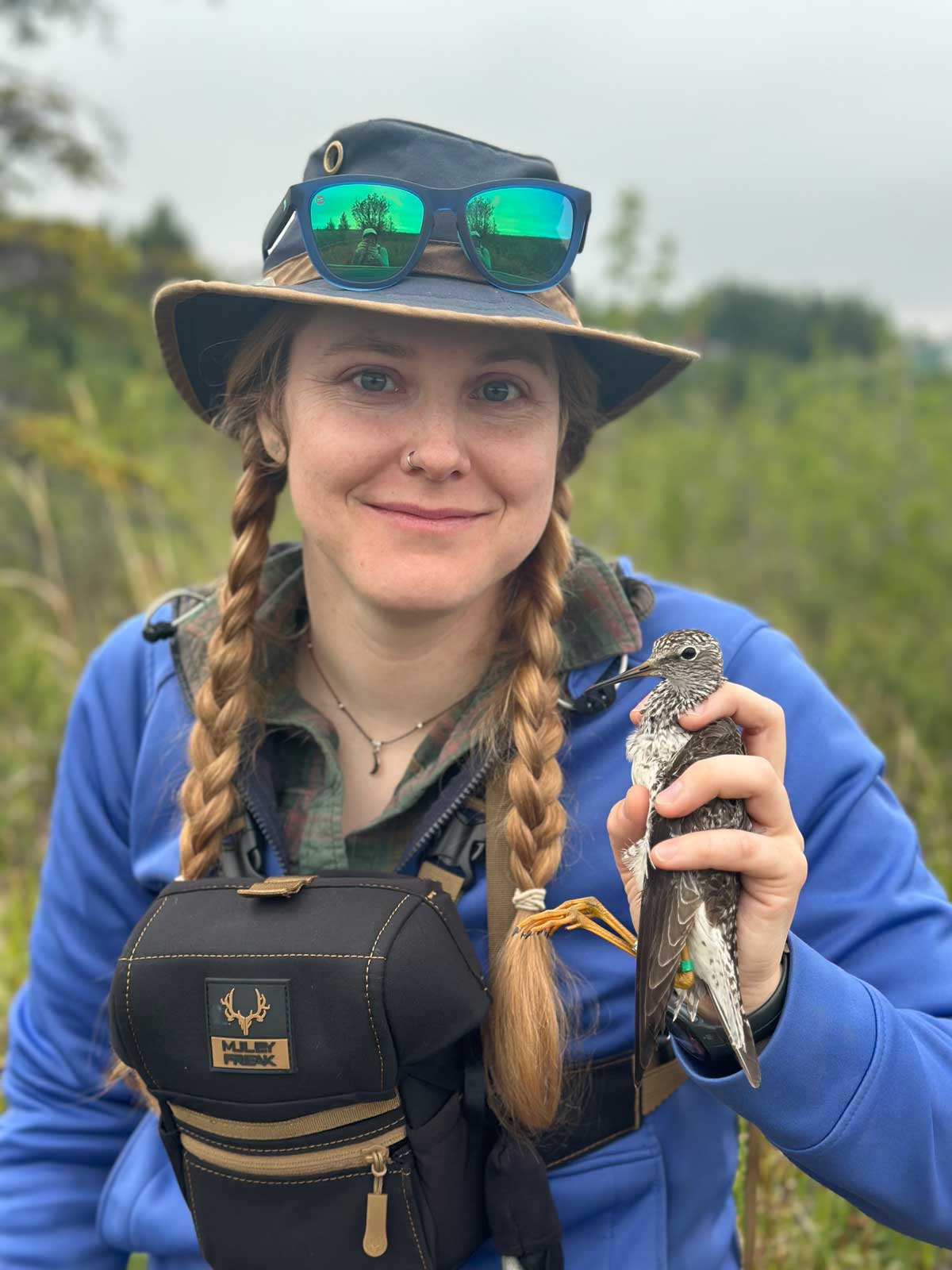
Arin joined the TED Program as a wildlife biologist for southcentral Alaska in January 2021. She is based in Anchorage and supports research on boreal birds and small mammals including two citizen science projects: the southcentral bat monitoring project and the birds ‘n’ bogs program. She also serves as the southcentral falconry representative and is the current chair of the Alaska Shorebird Group. Arin earned her B.S. in Biological Sciences at the University of Alaska Anchorage and her M.S. in Northern Populations and Ecosystems at the University of Troms∅, Norway. Her thesis focused on the toxicology of the Atlantic puffin and how the Svalbard population compared to other puffin colonies and seabird species in the Arctic. She has worked with a variety of species, including black-legged kittiwakes, northern fulmars, dovekies, murres, barred and northern spotted owls, collared pika, little brown bats, lesser yellowlegs, and various other boreal wetland bird species. Arin brings experience in public outreach and science communication as a teacher, a writer for Alaska Fish and Wildlife News, a social media manager, a children’s book illustrator, and a nature artist. Outside of work, Arin can be found painting birds, knitting sweaters, learning the piano, and going on long walks with her dog.
Arin can be reached at arin.underwood@alaska.gov or (907) 267-2111.
Jeff Wagner
Jeff Wagner
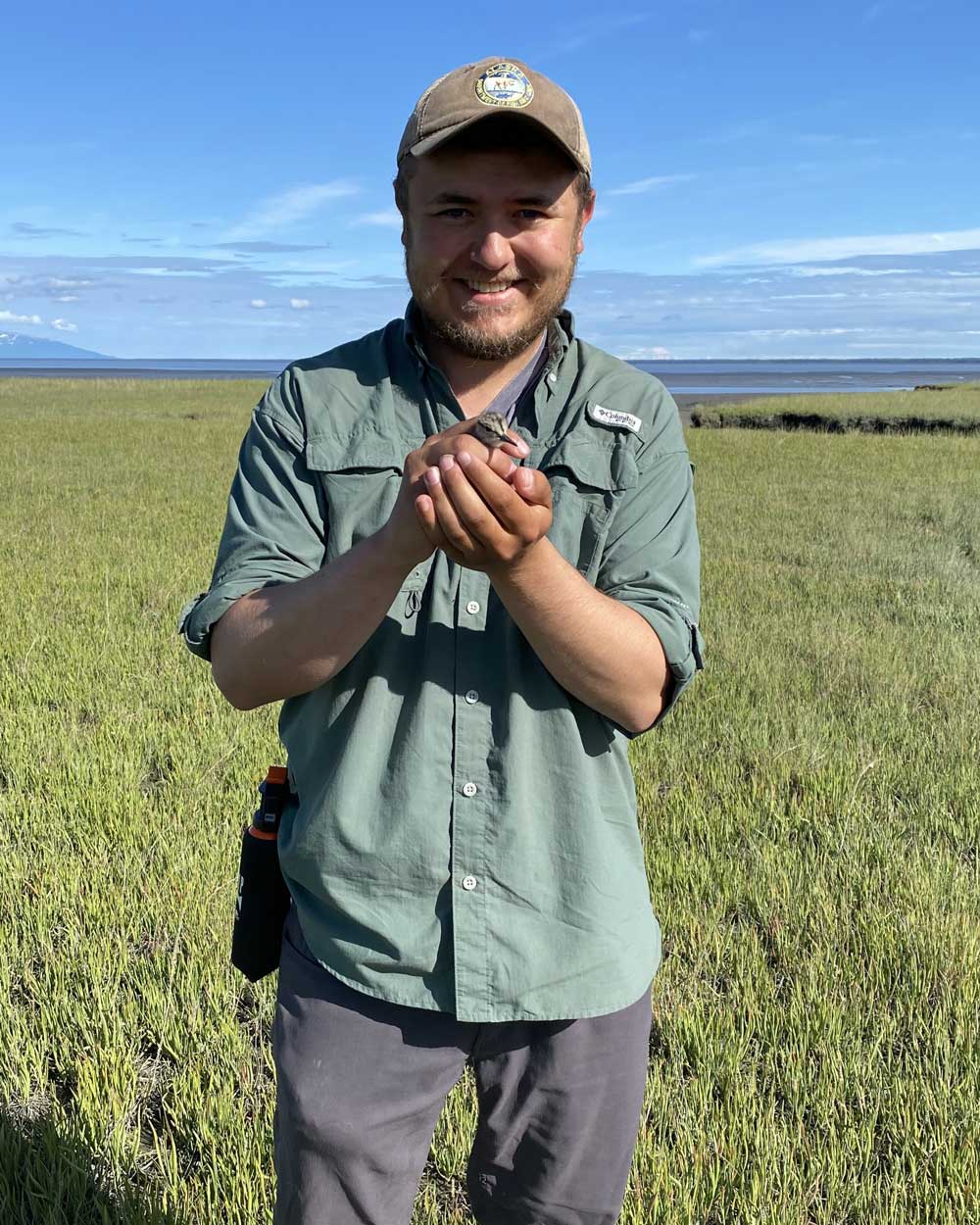
Jeff joined the TED program as a Biometrician in May 2025. He earned a B.S. in Biological Sciences from the University of Alaska Anchorage and is currently wrapping up a Ph.D. at the University of Wyoming. His dissertation research focuses on the development and extension of Bayesian hierarchical models to answer questions about drivers of population dynamics in species that occur at naturally low densities, including collared pika, moose, Lesser Yellowlegs, and Olive-sided Flycatchers. Jeff has worked on a variety of projects and taxa, including small mammals, songbirds, shorebirds, and African lions, and ungulates. He is broadly interested in bridging the gaps between intensive boots-on-the-ground field studies, modern computing, and ecological statistics, with particular interest in dynamic integrative data models and their utility for understanding and forecasting ecological responses to environmental change. When not at work, Jeff enjoys skiing and biking with his dogs and partner, birding, homebrewing, and playing ice hockey.
Jeff can be reached jeff.wagner@alaska.gov or (907) 328-6112.