
Hatcheries and Stocking
Hatcheries
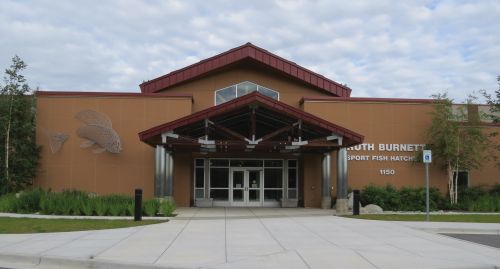
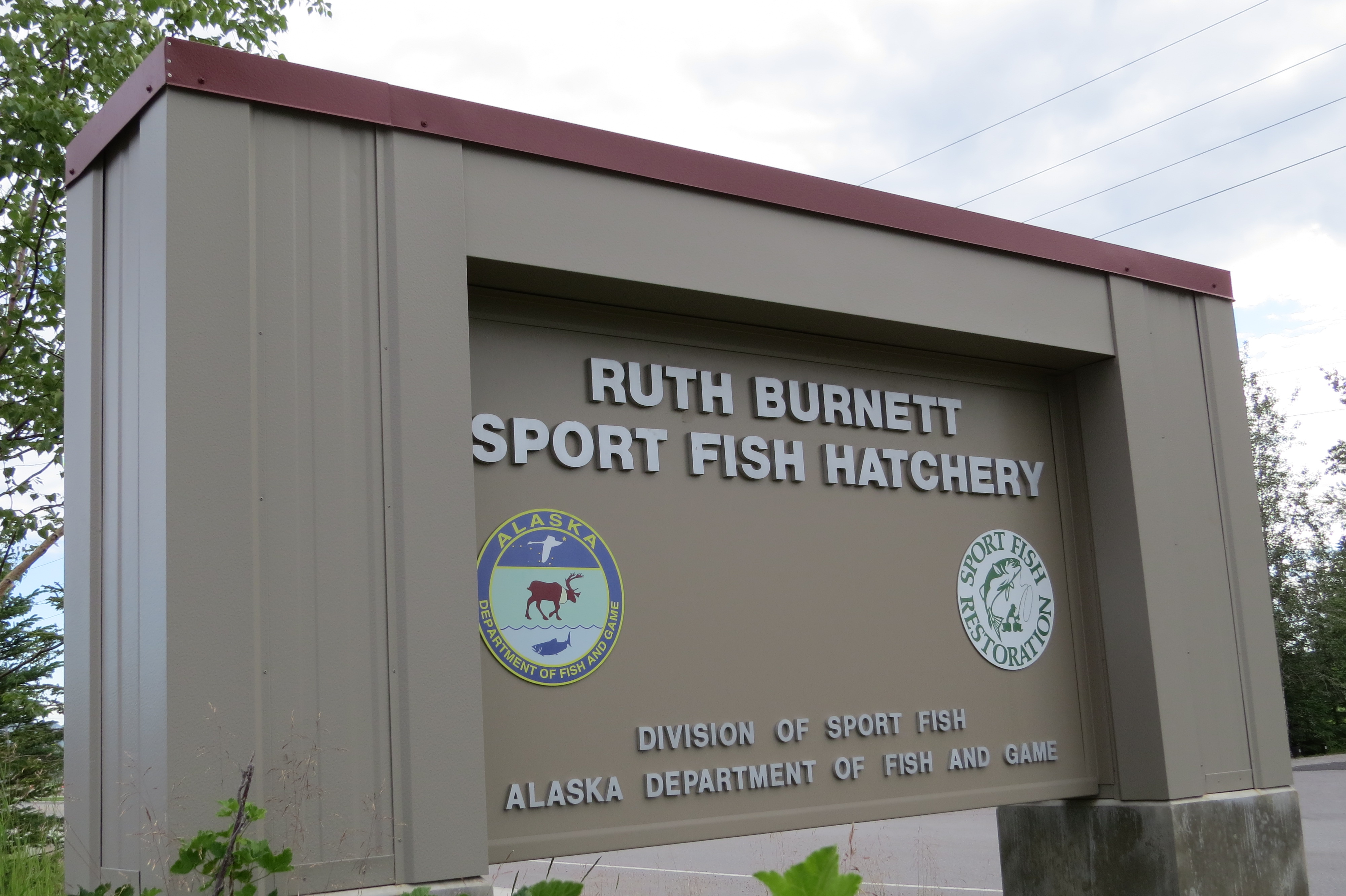
Ruth Burnett Sport Fish Hatchery Overview
The Ruth Burnett Sport Fish Hatchery is a modern aquaculture facility located in Fairbanks, Alaska, and operated by the Alaska Department of Fish and Game (ADF&G), Division of Sport Fish. The hatchery was established to support sustainable sport fisheries in Interior Alaska by supplementing fish populations, reducing harvest pressure on wild stocks, and expanding recreational fishing opportunities across the region.
Through the use of advanced recirculating aquaculture technology and coordinated fisheries management practices, the hatchery produces multiple sport fish species for stocking in landlocked lakes throughout Interior and Southcentral Alaska. The facility represents a key component of ADF&G's integrated approach to sport fisheries management, balancing recreational use with long-term conservation objectives.
Facility Design and Operations
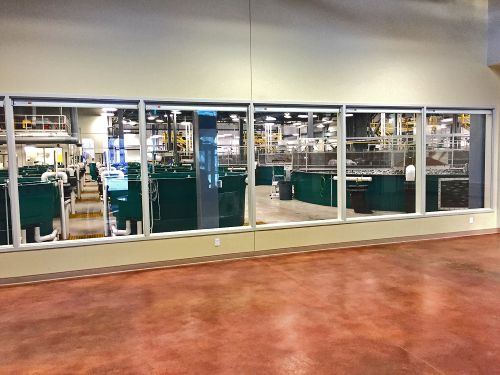
The Ruth Burnett Sport Fish Hatchery is designed around recirculating aquaculture systems (RAS) that enable efficient, controlled fish production under subarctic environmental conditions. These systems reuse and treat water through mechanical and biological filtration processes, allowing conservation of up to 95 percent of the water required for hatchery operations.
Temperature regulation, continuous water quality monitoring, and comprehensive biosecurity measures are incorporated throughout the facility to ensure stable rearing conditions and minimize risks associated with disease and environmental impacts. The use of RAS technology allows year-round production with high operational efficiency while significantly reducing dependence on natural water sources compared to traditional flow-through hatchery systems.
Species Production and Broodstock Sources
The hatchery produces a diverse assemblage of sport fish species that support recreational fisheries across Interior Alaska, including rainbow trout (Oncorhynchus mykiss), Arctic char (Salvelinus alpinus), Chinook salmon (Oncorhynchus tshawytscha), coho salmon (Oncorhynchus kisutch), and lake trout (Salvelinus namaycush).
Rainbow trout and Arctic char are derived from captive broodstock maintained at the William Jack Hernandez Hatchery (WJH) in Anchorage. Chinook and coho salmon eggs are collected annually from wild brood sources within the Fairbanks region and, as needed, may also be sourced from broodstock at WJH, consistent with ADF&G fisheries management objectives and genetic conservation protocols.
Lake trout are produced on an alternate-year cycle, with eggs obtained from wild broodstock populations. This approach supports genetic integrity while aligning production with long-term fisheries management strategies.
Production and Rearing Cycles
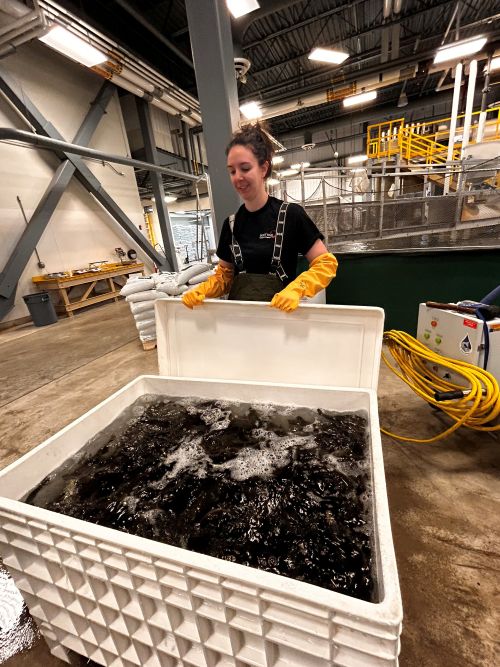
Fish production at the Ruth Burnett Sport Fish Hatchery follows species-specific rearing schedules that reflect biological requirements and management objectives. Rainbow trout eggs are collected in mid-winter, with fingerlings stocked during early spring and catchable-size fish released the following year. Chinook salmon eggs are collected in early summer and reared to catchable size for release the following fall. Arctic char eggs are collected in late fall and reared for extended periods of up to 18 months prior to release. Coho salmon eggs are collected in autumn, with fingerlings stocked approximately nine months later. Lake trout eggs are collected in the fall and stocked out the following fall in selected lakes in both Interior and Southcentral Alaska in accordance with regional fisheries management plans.
Stocking Program and Distribution
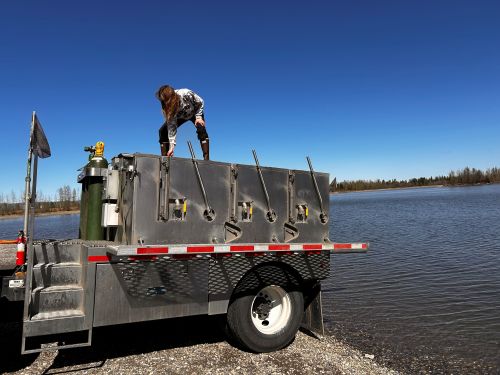
Fish produced at the Ruth Burnett Sport Fish Hatchery are stocked in 114 landlocked lakes across the Fairbanks, Nenana, Delta, and Glennallen regions, with lake trout also distributed to select lakes in Southcentral Alaska. Once fish reach appropriate size for release, they are transferred from rearing tanks using specialized pumping systems and transported in oxygen-equipped tanker trucks. For remote or inaccessible locations, fish are delivered by all-terrain vehicles, fixed-wing aircraft, and helicopters.
These coordinated stocking operations support consistent recreational fishing opportunities across a broad geographic area and contribute to the social and economic benefits associated with sport fisheries in Alaska.
Role in Fisheries Management
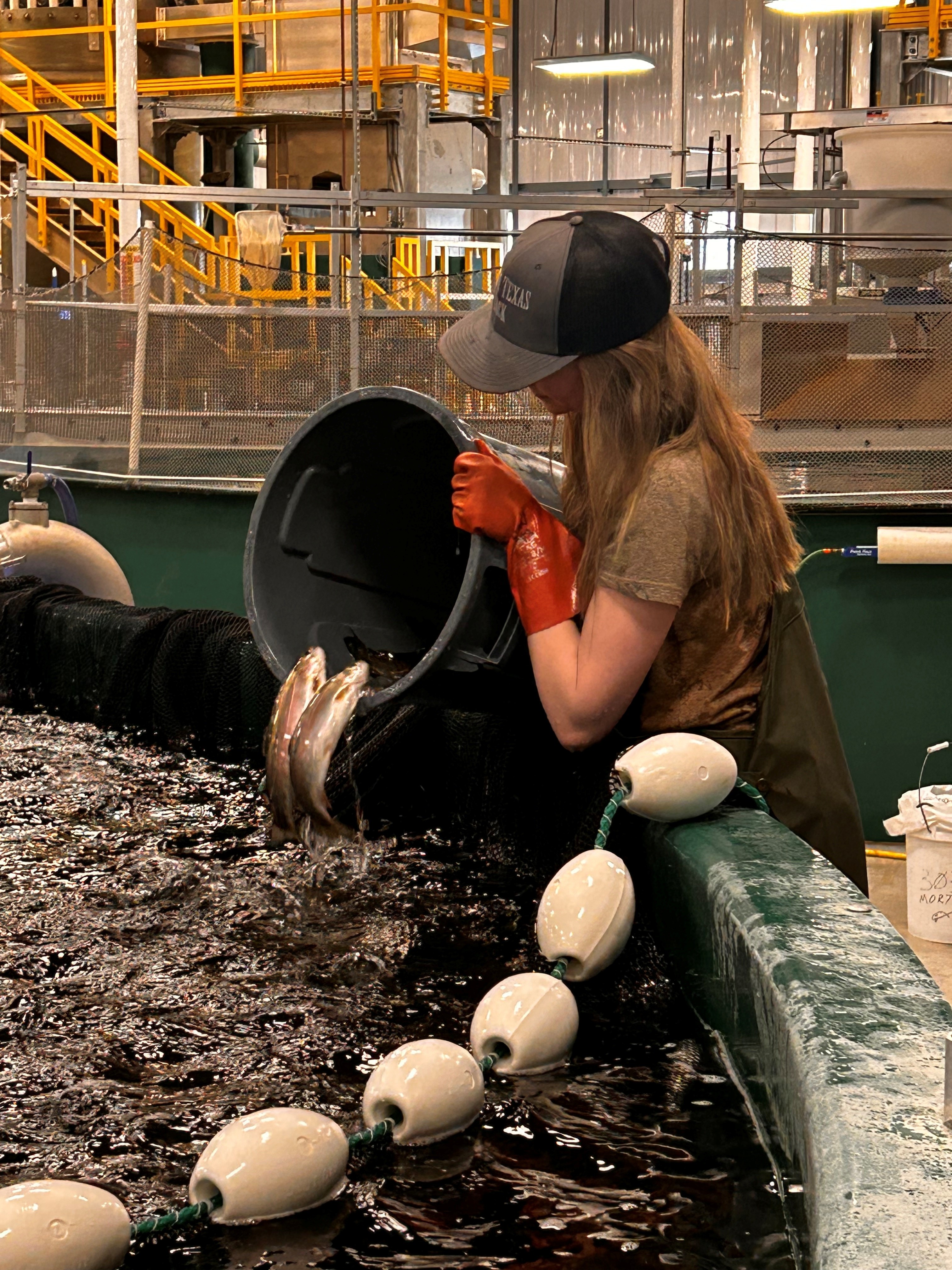
The Ruth Burnett Sport Fish Hatchery is an integral component of ADF&G's sport fisheries management program in Interior Alaska. Hatchery production supplements natural fish populations, helping to stabilize angling opportunities while reducing pressure on wild stocks. The facility also supports fisheries research, monitoring, and adaptive management by providing operational capacity and biological data to evaluate stocking outcomes and inform management decisions.
Public Education and Outreach
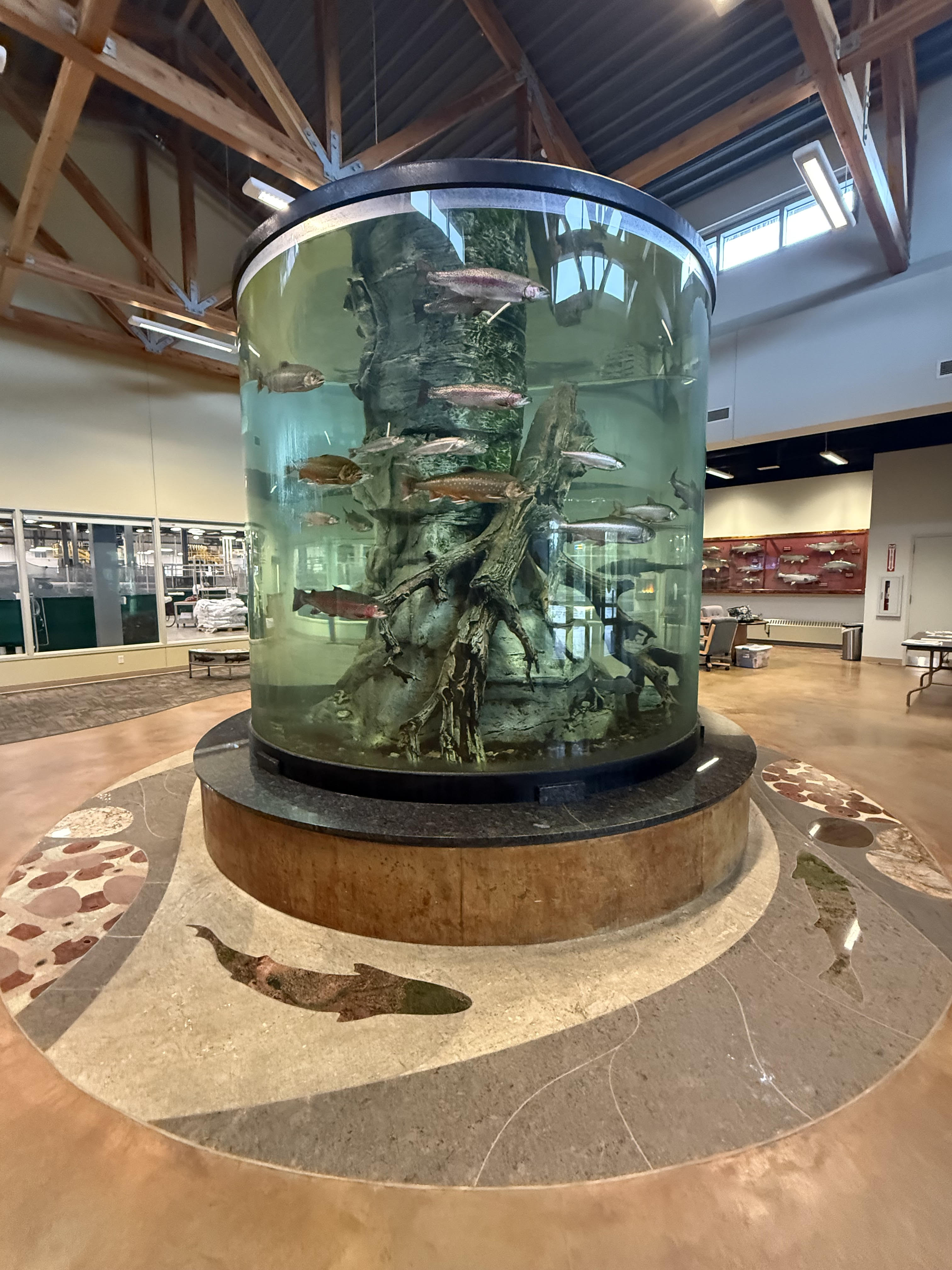
The hatchery is home to the Tanana Valley Fisheries Center, which serves as a public education and outreach facility. The center provides interpretive exhibits that highlight fisheries science, hatchery operations, and aquatic ecosystems in Alaska. Through these programs, ADF&G promotes public understanding of fisheries management and encourages responsible stewardship of aquatic resources. The Tanana Valley Fisheries Center is open to the public on weekdays, please contact 907-267-2523 for information about the Fisheries Center.
Legacy and Namesake
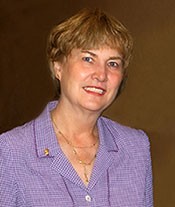
Ruth Burnett
The Ruth Burnett Sport Fish Hatchery is named in honor of Ruth E. Burnett, a respected Fairbanks civic leader whose leadership and advocacy were instrumental in establishing a sport fish hatchery in Interior Alaska.
Born and raised in Lewiston, Montana, Ruth Burnett moved to Fairbanks in 1955 and dedicated more than four decades to public service and community leadership. She served on the Fairbanks City Council and later as Mayor of Fairbanks, contributing to municipal governance and community development during a period of significant growth in the region.
In her later career, Mrs. Burnett served as a special assistant to U.S. Senator Ted Stevens, where she played a pivotal role in advocating for federal and state investment in a sport fish hatchery for Fairbanks. Recognizing the growing demand for recreational fisheries and the importance of protecting wild fish populations, she worked persistently to secure the funding and institutional support necessary to advance the project. Her efforts were central to the development and establishment of the Ruth Burnett Sport Fish Hatchery.
Today, the hatchery stands as a lasting expression of Ruth Burnett's vision and public service. Through its ongoing contributions to fisheries conservation, recreational opportunities, and public education, the facility continues to serve anglers and communities across Alaska, reflecting her enduring commitment to the state and its natural resources.