

March 2026
Issue 99
Southeast Steelhead, PWS Shrimp, and Helpful Fishing Tips
From the fascinating life of Southeast Alaska steelhead to hands-on tips for tying essential fishing knots, this issue is packed with useful insights. We've also included updates on Prince William Sound shrimp, recent regulation changes on the Tanana River drainage, and a fresh recipe to bring it all to the table.
If you have any questions about fishing and hunting licenses in Alaska, please visit our General License Information page.
Visit our online store if you need to purchase a license. Or download the ADF&G mobile app and you can store your licenses, tags and permits in your mobile device.
If you have a comment or story ideas for "Reel Times", we encourage you to send them our way. You can send comments to ryan.ragan@alaska.gov.
See you on the water.
Steelhead in Southeast Alaska
Life History and Monitoring Efforts by Carly Lemieux
Steelhead are one of the most fascinating fish species found in Southeast Alaska. They belong to the same family as Pacific salmon and trout, Salmonidae, and share the genus Oncorhynchus with Pacific salmon and cutthroat trout.
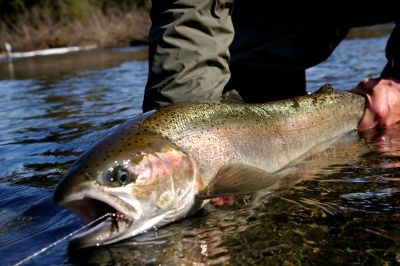
What surprises many people is that steelhead and rainbow trout are genetically the same species (Oncorhynchus mykiss). The difference between the two lies in life history strategy. Rainbow trout typically remain in freshwater systems for most or all their lives, while steelhead migrate to saltwater before returning to freshwater to spawn. This migration to saltwater is what distinguishes steelhead from their freshwater-resident counterparts.
While Pacific salmon, cutthroat trout, and steelhead share a genus, their life histories differ in important biological ways. Pacific salmon are semelparous, meaning they spawn once and then die. Their life cycle begins in freshwater streams, where eggs hatch and juveniles rear before migrating to sea. After one to several years in the ocean, adults return to their natal streams to spawn, completing their life cycle.
Steelhead, in contrast, are iteroparous. After spawning in freshwater, they can return to the ocean, recondition, and potentially spawn again in future years. In some cases, steelhead may spawn up to four times in their lifetime. Not all steelhead survive to spawn multiple times, and repeat spawning rates vary among systems. Research has also documented instances of steelhead entering freshwater and returning to sea without spawning. Their flexibility in life history is one of the traits that makes them unique among Pacific salmonids.
Steelhead also display variability in run timing with immigrations occurring in the Spring or Fall. In Southeast Alaska, this diversity helps buffer populations against environmental variability and contributes to overall resilience.
Like other salmonids, steelhead play an important ecological role. By moving nutrients between marine and freshwater systems, they contribute to stream productivity and provide forage for wildlife. These ecological connections highlight why maintaining healthy populations benefits both fisheries and the broader ecosystem.
Monitoring Steelhead in Southeast Alaska
The Alaska Department of Fish and Game has monitored steelhead populations in parts of Southeast Alaska since the late 1980's. From easily accessible streams to more remote watersheds, these long-term projects are designed to track population trends across a range of systems to support sustainable management of the fishery.
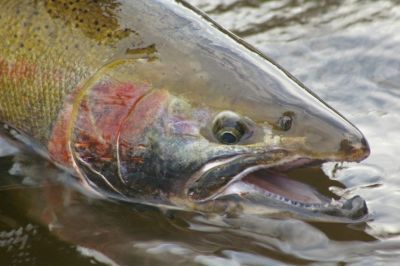
Across the region, selected streams are surveyed annually to establish population baselines and monitor escapement, or the number of fish that successfully reach spawning grounds. These long-term datasets allow biologists to evaluate trends over time rather than relying on a single year of information.
For example, in the Juneau area, Peterson Creek is one of the systems where snorkel surveys have been conducted for many years. The data collected there contributes to a broader regional understanding of steelhead abundance, variability in run timing, and long-term population trends.
When escapement objectives are consistently achieved over time, fishing opportunities may be considered. If escapement levels fall below expected thresholds, more conservative management measures (including closures) may be necessary to protect the population. These decisions are guided by management standards and policies and long-term data, with the goal of maintaining sustainable steelhead fisheries across Southeast Alaska.
What Surveys Looks Like in the Field
One of the primary tools used to monitor steelhead populations is snorkel survey work.
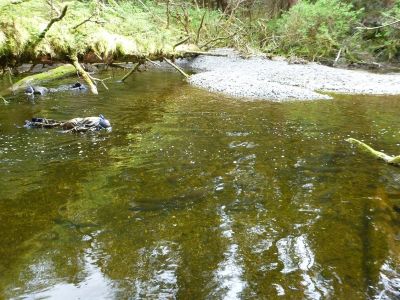
Each spring, as snow begins to melt and stream temperatures gradually rise, biologists enter freshwater systems to document returning fish. These subtle increases in water temperature often coincide with steelhead movement into spawning streams.
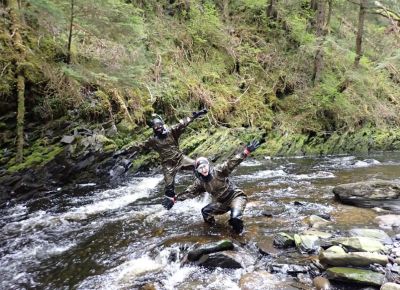
Field crews hike into remote locations, sometimes traveling miles on foot before entering the water. Wearing dry suits or wetsuits, surveyors snorkel through pools and glide past boulders and large woody debris, counting steelhead observed in spawning habitat. Water conditions can be cold and challenging, especially during early-season surveys when flows are high and temperatures remain low.
Snorkel surveys provide valuable data on fish abundance, distribution, and habitat use. Observations also improve our understanding of how steelhead utilize stream features such as woody debris, side channels, and varying flow conditions during spawning.
Behind the scenes, these field counts are compiled, analyzed, and compared to long-term datasets. Biologists evaluate trends over time to assess whether populations are stable, increasing, or declining. This combination of fieldwork and analytical review forms the backbone of steelhead management in the region.
Learn More
For those interested in learning more about steelhead ecology in Southeast Alaska, Matt Catterson authored an in-depth article on steelhead of the Situk River that provides additional biological background and context. Patrick Fowler has also written about steelhead survey work, including photographs and underwater footage demonstrating how snorkel surveys are conducted.
Steelhead are a remarkable species with complex life histories and strong ties to both freshwater and marine environments. Continued monitoring helps ensure that management decisions are informed by science and that these fish remain part of Southeast Alaska's waters for generations to come.
For additional information on steelhead in Southeast Alaska, check out these articles: The Situk River: An Alaska Steelhead Mecca by Matt Catterson and Southeast Alaska Steelhead: A Unique Fish and a Unique Fishery by Patrick Fowler.
A Look at Some Common Fishing Knots
Common fishing knots used by anglers include the Improved Clinch knot, the Palomar knot, the Double-Uni knot and the Surgeon's knot. The Improved Clinch knot and the Palomar knot are used to tie line to a hook, swivel, lure or fly. And the Double-Uni and the Surgeon's knot are used to connect two different types of fishing line.
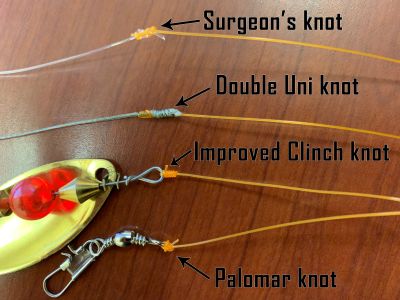
Improved Clinch knot
The Improved Clinch knot is a very common fishing knot. This knot is easy to tie and is most often used to connect fishing line to a hook, swivel, lure or fly. This knot is best used when working with monofilament or fluorocarbon lines.
Palomar knot
The Palomar knot is an easy knot to tie and can be used when working with braided line, monofilament or fluorocarbon lines.
Double Uni knot
The Double Uni knot is used when connecting two different pieces of fishing lines with equal or unequal diameters. This knot can be used to connect various types of fishing lines including braided line, monofilament or fluorocarbon lines.
Surgeon's knot
The Surgeon's knot is a strong knot that is easy to tie. This knot is used when connecting two different types of fishing line with equal or unequal diameters.
Check out one of our videos on how to tie four basic fishing knots.
Egg Loop knot
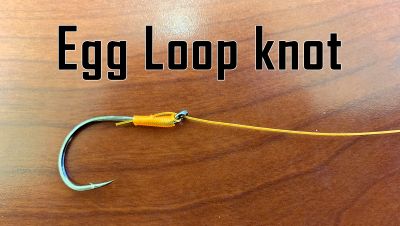
The Egg Loop knot is a knot used to secure bait to the shank of the hook, rather than having to pierce the bait with the point of the hook. The Egg Loop knot is used extensively by many salmon anglers who use cured salmon roe as bait. This knot takes some time to master but is an extremely effective knot to use when making your own leaders.
Check out this instructional video on how to tie an egg loop knot.
A Look at Prince William Sound Spot Shrimp
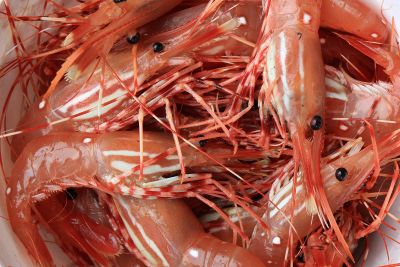
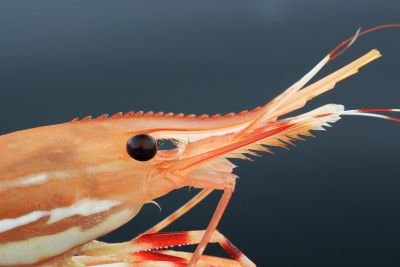
Prince William Sound Spot Shrimp are an interesting and tasty critter that are currently experiencing a period of low productivity. This is why the 2026 noncommercial season has been reduced to May 1 - June 8, 2026, and shrimpers are limited to 2 pots per vessel throughout Prince William Sound.
Did you know
- Shrimp are protandrous hermaphrodites which means they begin life as male and transition to female between 5 and 6 years old. They spawn once as a male and one or more times as a female.
- Since the 90's, ADF&G staff have conducted an annual survey every October at set stations to monitor spot shrimp.
- The twine size and material on your pot's escape mechanism is important; thin cotton twine degrades quickly so shrimp and other critters won't get stuck inside forever if you lose your pot.
- 7/8-inch holes in your pot allow for smaller, younger shrimp to escape and grow, hopefully allowing them to reproduce at least once before they are harvested.
- Bait is key to catching shrimp! Use soft bait (herring/cat food) for immediate scent release and hard bait (pellets soaked in herring oil) for long term scent release.
How you can help us
- Report in season! While not required, it is very easy to do! Using the ADF&G Mobile App you can keep track of your harvest and report instantly. If you don't use the ADF&G Mobile App, you can still always report your harvest online at any time! When you submit your harvest, whether it is through the App or the Online reporting page, you will receive an email confirmation that your report has been received.
- Keep good track of your soak times on your permit. We use this data to calculate catch-per-unit-effort (CPUE; how many shrimp you catch per hour the pot is soaked) which helps monitor trends throughout PWS. You might find it interesting to see how different soak times influence your shrimp catch rates. There is often a sharp increase in shrimp catch during the start of your pot soaking, and then a steep drop off in catch if you let it sit for too long. Too long of a soak can lead to predators entering the pot, shrimp finding their way out, and bait losing its efficacy.
To learn more about management of PWS Spot Shrimp, check out the presentation from our Public Meeting on February 12, 2026, on the ADF&G YouTube Channel.
As a reminder, 2026 shrimpers in Prince William Sound need to report their harvest 2 weeks after the season closes on June 8, no later than June 22, 2026.
Questions can be directed to Area Management Biologist, Brittany Blain-Roth via email Brittany.blain@alaska.gov, or to Assistant Area Management Biologist Donnie Arthur at Donald.arthur@alaska.gov.
Board of Fisheries makes changes to Tanana River drainage sport fisheries
The Alaska Board of Fisheries made several changes to sport fishing regulations for the Tanana River drainage at its Arctic-Yukon-Kuskokwim finfish meeting held in November in Fairbanks.
The new regulations will take effect with the release of the 2026 Northern Alaska Sport Fishing Regulations Summary booklet when it is issued in spring of 2026.
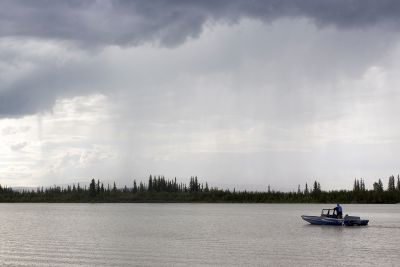
- Catch-and-release fishing will be allowed year-round for northern pike in Harding Lake.
- The sport fishing season for northern pike in the Tolovana River drainage (including Minto Flats, Minto Lakes, Tatalina River, Chatanika River, and Goldstream Creek) will be open from April 15 through October 14 instead of June 1 through October 14. In addition, the provision of the Minto Flats Northern Pike Management Plan that required the Department to reduce the sport daily bag and possession limit from 5 fish to 2 fish by emergency order when subsistence harvest is 750 or more northern pike in the Chatanika Harvest Area was repealed. The Department will continue to monitor sustainability of harvest of the Minto Flats northern pike population, and, the Department will reduce bag limits, if necessary, by emergency order.
- The daily sport fish bag and possession limit for northern pike in Volkmar Lake will change to general regulations: 5 fish a day 5 in possession, only 1 of which may be 30 inches or longer.
- Ice house registration will no longer be required in the Tanana River drainage.
- The youth-only fishery for Arctic grayling in the lower Chena River during four weekends in June and July was repealed. Anglers of all ages will now be able to fish for Arctic grayling throughout the summer.
- The special regulations for Arctic grayling in the Shaw Creek drainage and the Tanana River within a 2-mile radius of Shaw Creek were repealed. General regulations for Arctic grayling will apply including open year-round to harvest with a bag limit of 5 per day, 5 in possession.
- Rainbow Lake bag and possession limit for rainbow trout will increase from 5 to 10 fish, of which only 1 may be 18 inches or greater.
How To Find Employment Opportunities with ADF&G
Interesting in working for the Alaska Department of Fish and Game?
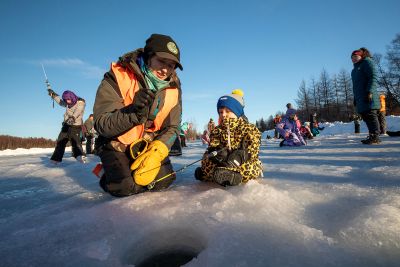
Our people make all the difference in the management and continued sustainability of Alaska's fish and wildlife resources. ADF&G employees are a part of a large and diverse family of professionals who are respected around the world. ADF&G's status as an excellent fisheries and wildlife management agency is ensured year after year, because of our staff.
Job opportunities include:
- Permanent: A position in the classified service that is not time-limited.
- Non permanent: An employee in a temporary work assignment of less than 120 days or a work assignment established for a specific program, project or assignment.
- Seasonal: A permanent position established to meet recurring seasonal needs of less than 12 months duration during any calendar year. Please note that seasonal opportunities are frequent and essential in our summer business operations. In fact, our workforce doubles in the summer, so opportunities are readily available.
- Internships.
For more information on job opportunities with ADF&G, please visit the Alaska Department of Fish and Game link in Workplace Alaska.
Recipe of the month: Grilled Alaska Cod Gyro
Enjoy your next meal with this recipe for a : Grilled Alaska Cod Gyro from the Alaska Seafood Marketing Institute.
Enjoy!
If you have any questions about the Reel Times newsletter, please contact Ryan Ragan at ryan.ragan@alaska.gov